

Diastasis Rectus Abdominus and The Pelvic Floor
Do you feel a pit, weakness, doming, or abdominal muscle separation within your abdomen? This feeling can sometimes occur during crunching, planks, or sit-ups but varies from person to person. This condition is known as Diastasis Rectus Abdominus (DRA). In this article, we will review Diastasis Rectus Abdominus, pelvic floor dysfunction, and how pelvic floor therapy can help.
What is Diastasis Rectus Abdominus (DRA)?
Diastasis Rectus Abdominus (DRA) is the separation of the Rectus Abdominus muscle bellies in the center of our abdomen. One of the most common causes of DRA is pregnancy; however, this condition can also affect athletes, post-op abdominal surgical patients, and those with round abdomens.
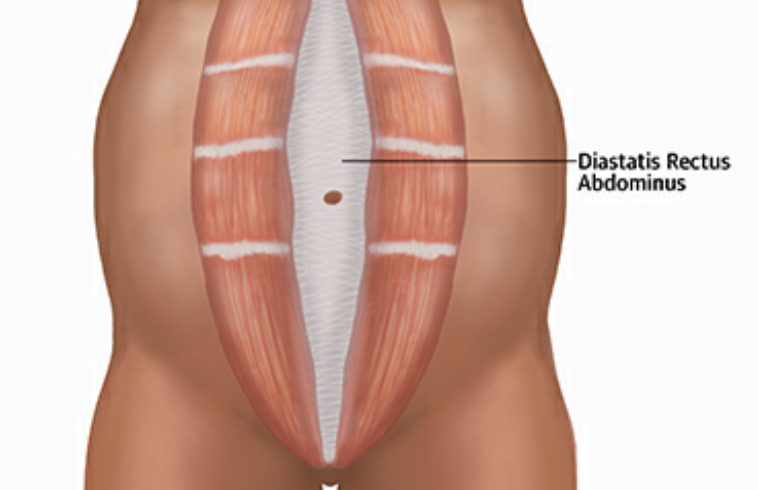
Source: https://www.physio-pedia.com
Pregnancy and Diastasis Rectus Abdominus
During pregnancy, the abdomen expands to create room for the growing baby. Under the direction of hormones, muscles, and ligaments soften and lengthen to allow this expansion.After giving birth, these deep muscles and ligaments have a new resting position, affecting their ability to recruit and coordinate with overlying muscles. Deep core muscles can become inhibited while other muscles become overactive. Nearly 100% of women will have some degree of DRA by the end of pregnancy. If symptoms are present during pregnancy or persist into postpartum, this can be retrained to improve strength and pressure management.Rehab for Diastasis Rectus Abdominus may help prevent back pain and other pressure issues such as pelvic organ prolapse and stress urinary incontinence. It is important to note that DRA rehab is important for anyone with the condition, not just mommas.
How Pelvic Floor Therapy Can Help
A pelvic health physical therapist (PT) can test for Diastasis Rectus Abdominus with visual observation and manual assessment. With impaired pressure management and faulty movement strategies, separation and symptoms can worsen. All diastases are not the same! One common failure in the treatment of women’s health conditions is the assumption that every case is the same. There are varying degrees of width, depth and symptom severity. This is why generalized advice such as “never do crunches” is not helpful. While an exercise may help one person heal their DRA, the same exercise may exacerbate someone else’s DRA. To load tissue safely, sufficiently and progressively, we need to know exactly where the breakdown in pressure control happens. This is why every diastasis deserves one on one assessment and an individualized treatment plan.
Learn More About Pelvic Floor PT and DRA
At Pillar Kinetic, we provide pelvic floor physical therapy to address several health issues, including Diastasis Rectus Abdominus. If you have any questions about DRA and pelvic floor dysfunction, contact our Las Vegas physical therapy clinic with any questions.

Schedule a free consultation
Get back to doing what you love, completely pain-free. Take the first step and schedule a free 15-minute phone consultation with a member from our Las Vegas physical therapy clinic.