

Knee pain physical therapy in Las Vegas
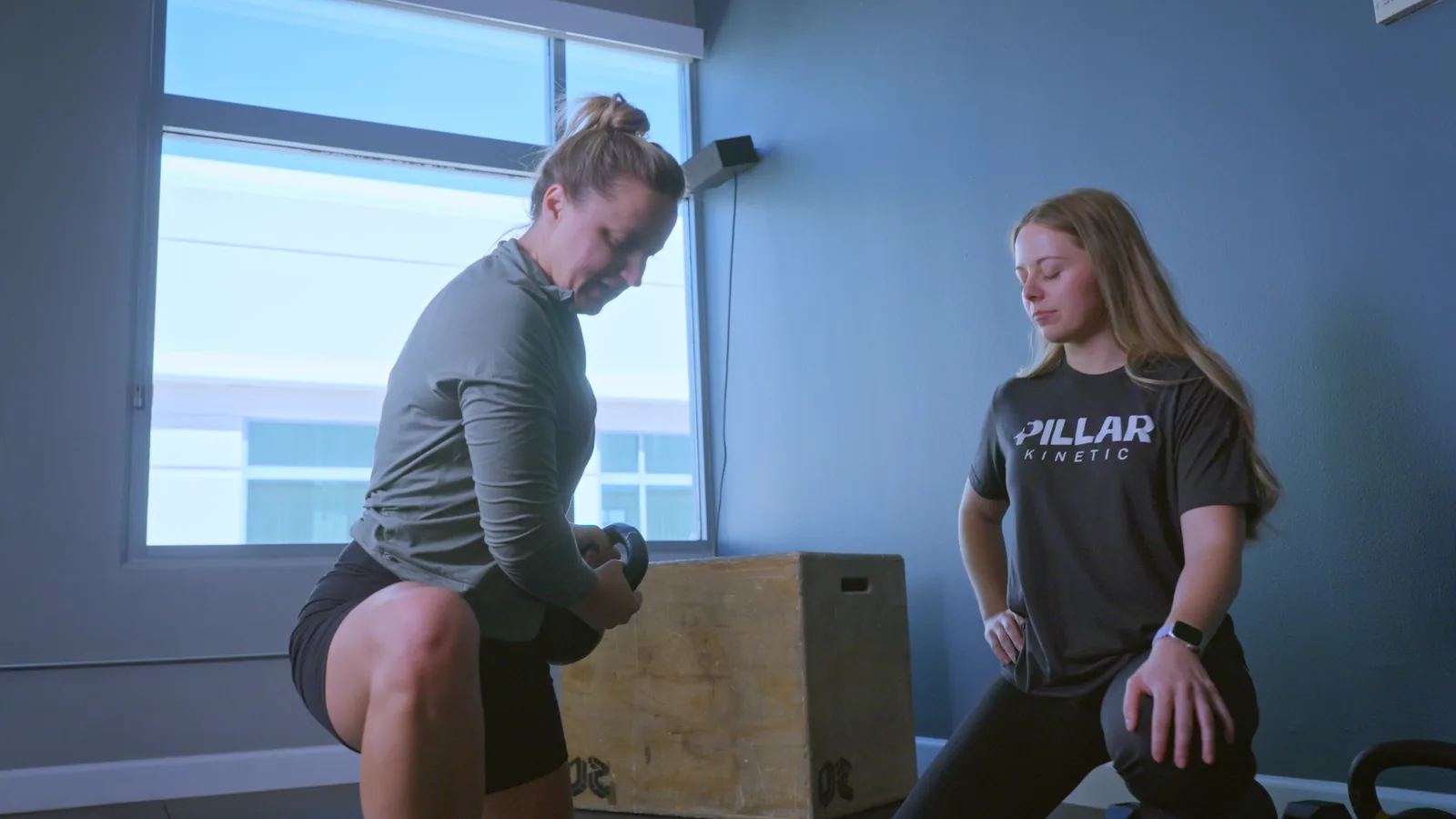
If the pain started with a twist, a pivot or an awkward landing, our ACL injury rehabilitation page covers that path. This page is about knee pain that builds up over time.
Start with where it hurts
Where the pain sits, and what brings it on, narrows down what is overloaded. The exam confirms it.
- Front of the knee: around or behind the kneecap, worse on stairs, squats or after a long sit
- Just below the kneecap: sore as a session starts, easing once you are warm
- Outside of the knee: comes on at about the same distance into every run
- Inner or outer edge: after a ligament sprain, before you are back to cutting and pivoting
- The whole joint: stiff first thing, sore on stairs and getting out of a chair
Why rest has not settled it
Rest takes the edge off, but the knee loses tolerance at the same time as it loses pain. Go back to the same run or the same squat session and the ache is waiting at the same point.
Tendons and the joint behind the kneecap both respond to load. Pitched right, load makes them more capable, and without it they slowly get less so.
What is usually feeding it
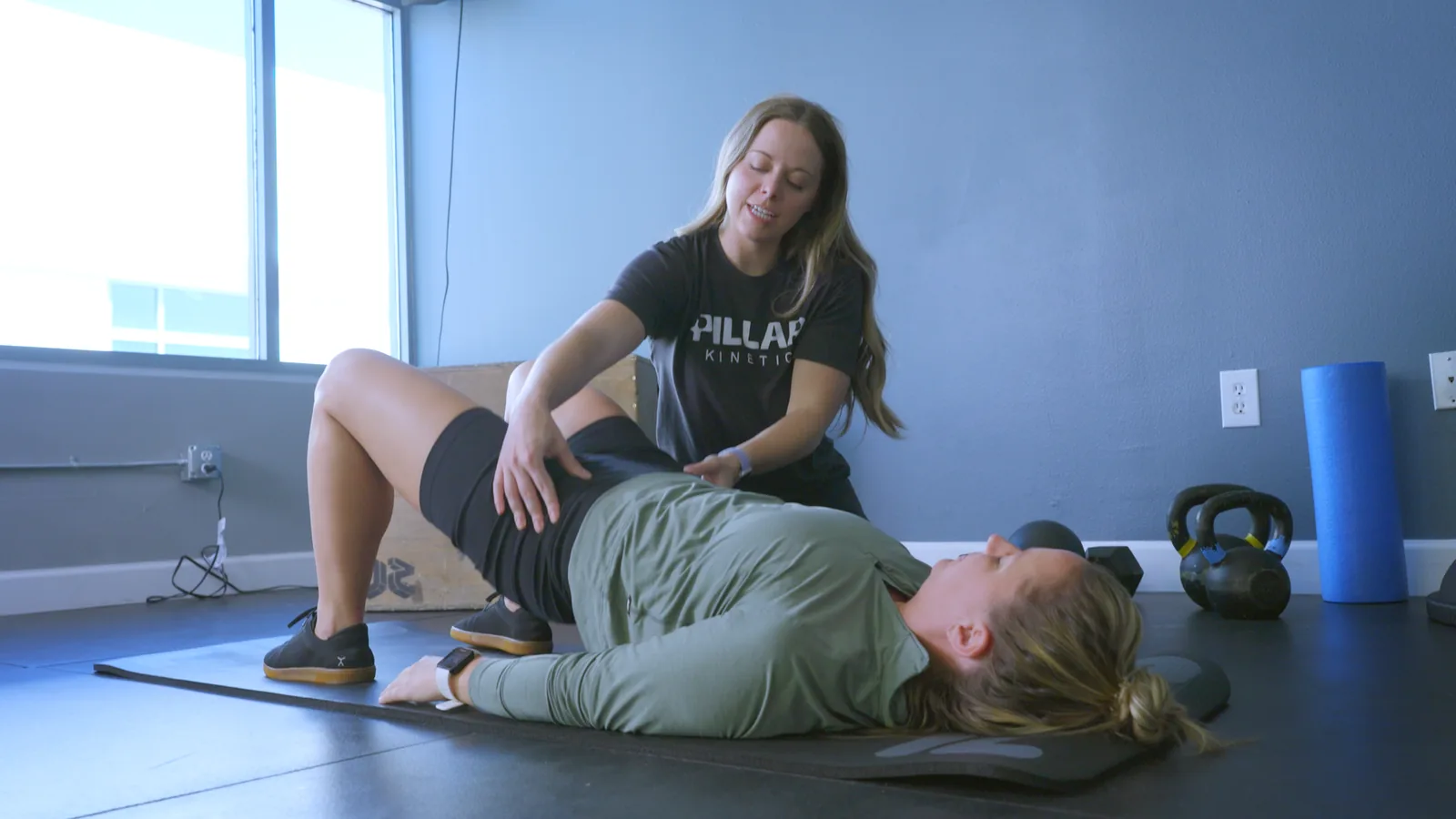
Pain around the kneecap is usually driven by a mix of hip strength, the way you move, and how quickly your training load went up. That is why we test your hips and watch you move, not only the knee.
If running is what sets it off, a running gait analysis shows what the knee and hip are doing across the stride.
When it is more than overload
Pain that started with a twist or a fall is a different problem from overload. Not every meniscus tear needs surgery, and collateral ligament sprains are often managed without it. If anything we find needs imaging, we say so plainly and refer you.
How we build it back
Find the source
We work out whether the kneecap joint, the patellar tendon or something else is overloaded, and check whether the hip is part of the problem.
Set today's load
We find what the knee tolerates now, which is rarely nothing, and keep you as active as possible around it.
Build on a schedule
Quad, hip and single-leg strength work gets heavier as the knee settles, so its capacity keeps rising toward what your training asks of it.
Judge it the next morning
Some soreness during a session is fine if it settles within a day and is no worse the next morning. That rule decides when the load goes up.
What your first visit covers
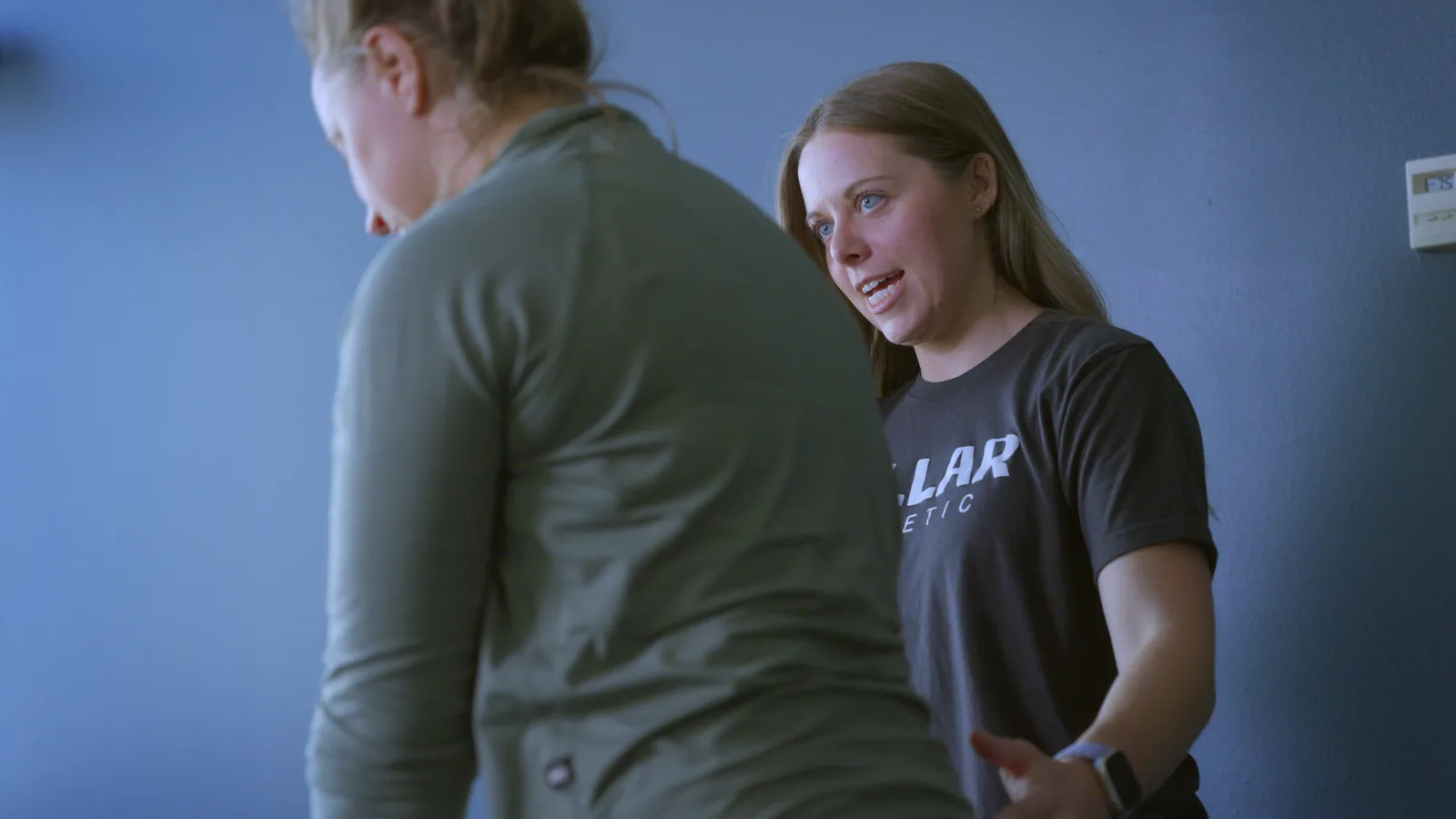
An hour, one-on-one with your therapist. We go through the history of the knee and your training, then assess movement quality, strength on each side, joint mobility, and how the knee handles squatting and stepping.
You leave with a clear picture of what is driving the pain, a realistic timeline, and what the first stage of loading looks like.
Book appointmentFrequently asked questions
Should I stop running or squatting while my knee hurts?
Usually not completely. We change the depth, the load or the distance so the tissue keeps adapting while it settles. Time off lowers the pain and the capacity together, so the pain tends to return when you go back to the old load.
Do I need an MRI for knee pain?
Usually not for pain that built up over time. Joint changes on scans often show up in people with no symptoms, so we start with a hands-on exam and will tell you plainly if you need imaging or a referral.
How can you tell tendon pain from kneecap pain?
Patellar tendon pain sits just below the kneecap and often eases once you are warm. Pain from the joint behind the kneecap sits around or behind it and builds on stairs, squats and long sits. We test for both, because each needs its own loading plan.
How long does knee pain take to settle?
It depends on what is overloaded. Tendon pain that has lasted a while can need three to six months to settle fully, though you should feel a difference within a few weeks.
Related care
More in one-on-one physical therapy: orthopedic physical therapy, ACL injury rehabilitation, running gait analysis, and sports injury rehabilitation.
Knee pain physical therapy for patients from Las Vegas, Spring Valley, North Las Vegas, Summerlin South, Summerlin and Summerlin West, at our clinic at 7381 Prairie Falcon Rd, Ste 110, Las Vegas.