
Dry Needling in a PT Plan: What Patients Feel
Does it hurt, and does it work? The honest answers are "less than you might expect, though it is not nothing" and "it can help, as one part of a plan, not by itself."
In this article
Here is what to expect if your physical therapist suggests it.
What dry needling is
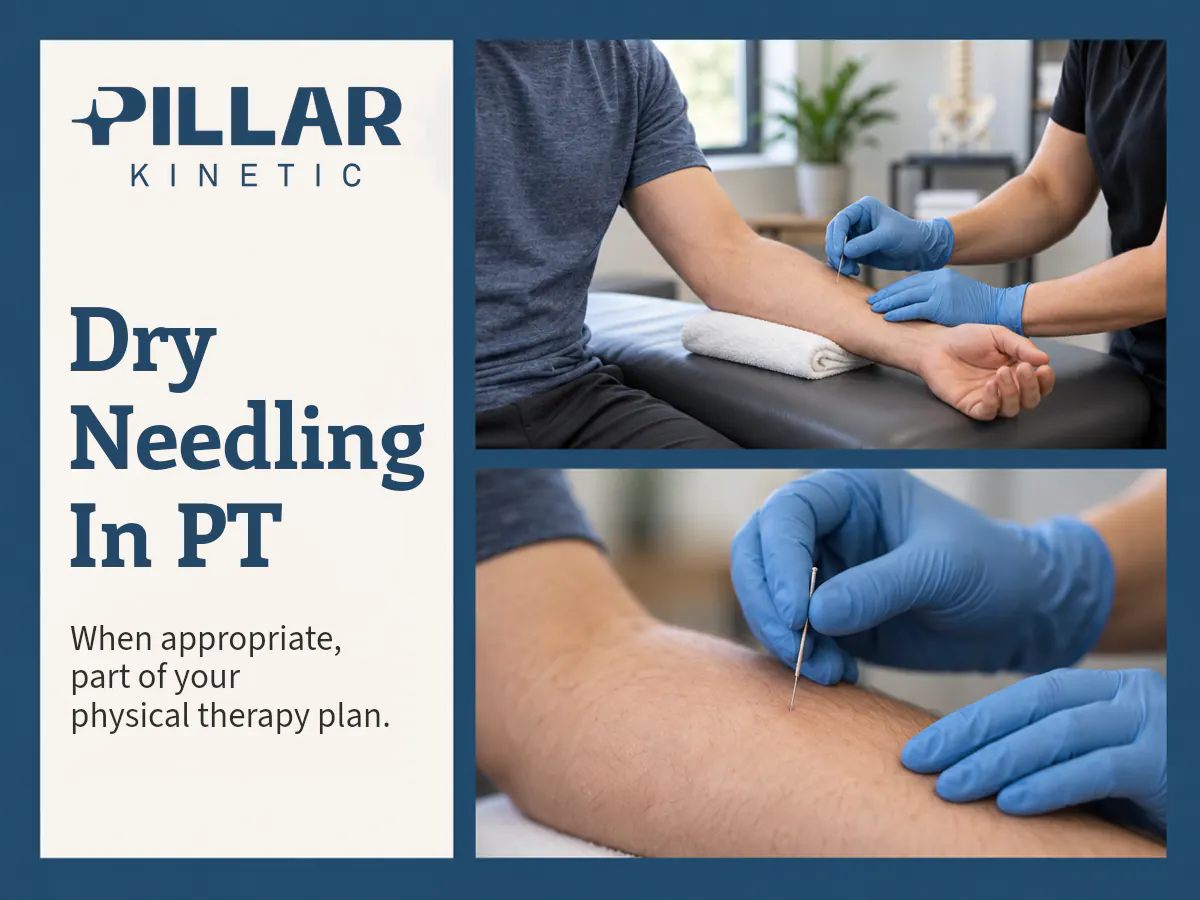
A physical therapist places very thin, solid needles into tight bands in a muscle, sometimes called trigger points, or into other tissue that is contributing to your pain. The aim is to calm down a muscle that is guarding, reduce pain, and make it easier to move and do the exercises that create lasting change.
It looks a bit like acupuncture because the needles are similar, but the reasoning behind it is different. Dry needling is based on anatomy and on what your PT finds in your evaluation.
What it feels like
| When | What people usually notice | What to know |
|---|---|---|
| Needle going in | A quick, small prick, or nothing at all | Tell your therapist if anything feels sharp or wrong |
| Twitch response | A sudden jump or cramp in the muscle | Strange the first time, and often a sign the right spot was found |
| During the session | Pressure, a deep ache, or warmth | You and your therapist agree on how much is okay |
| Afterward | Soreness similar to a hard workout, often for a day or two | Light movement and staying hydrated tend to help |
Some people feel immediate relief in range of motion. Others mostly notice soreness the first time and feel the benefit a day later. Both are normal.
Warning signs after a session
Call the clinic or seek urgent care if you have pain that keeps getting worse instead of easing, dizziness or fainting, shortness of breath or chest pain, or signs of infection such as spreading redness, heat, or fever. These are uncommon, but you should know what to watch for.
Where it fits in your plan
Dry needling is a tool, not the whole treatment. A typical sequence looks like this:
- Your evaluation identifies a muscle or area that seems to be driving your symptoms
- Your therapist explains dry needling and asks for your consent. You can always say no
- Needling is used to reduce pain or tension so you can move better
- Exercise, strength work, and education do the long-term work
- At recheck visits, you and your therapist decide whether it is helping enough to keep using
If needling is not making a measurable difference in how you move or what you can do, it should be dropped or changed.
Who should mention it first
Bring these up before any needling starts:
- Pregnancy
- Blood thinners or a bleeding disorder
- A strong fear of needles
- A weakened immune system
- Skin infections or conditions near the treatment area
- A pacemaker or other implanted device, if electrical stimulation is being considered
None of these automatically rules it out, but your therapist needs to know so they can decide whether it is appropriate.
How to tell it is working
Ask your therapist what they are tracking besides how you feel that day. That might be range of motion, strength, how long you can walk or sit before symptoms start, or a return to a specific activity like golf, lifting, or hiking at Red Rock. Progress should show up in those markers over time, and not only on the table.
Coming in for your first visit
Bring a list of your medications, any imaging reports you have, and a few sentences on what you want to get back to doing. Wear loose, comfortable clothing that lets the therapist reach the area being treated. Ask about costs and insurance coverage ahead of time so nothing catches you off guard.
FAQ
Is dry needling the same as acupuncture?
No. The needles look similar, but the training, approach, and reasoning are different. Your therapist can explain how they use it.
Will I be sore afterward?
Usually a little, similar to a tough workout. Severe or unusual symptoms are a reason to call.
How many sessions will I need?
It depends on how you respond. Your therapist should reassess regularly and stop if it is not helping.
If you are curious whether it could help you, learn more about dry needling in Las Vegas or about Pillar Kinetic as a physical therapy clinic in Las Vegas.