

Shoulder impingement rehab in Las Vegas
If an MRI has named a tear, or the shoulder is weak as well as painful, our rotator cuff rehab page covers that side of things. The two are treated differently, so the first visit sorts out which one you have.
The signs people describe
The exam is what tells impingement apart from a cuff tear, instability or the biceps tendon, which can all hurt in similar places.
- Overhead: pain reaching up or lifting above your head
- Pressing: pain at the front of the shoulder on push-ups or presses
- At night: sore when you sleep on that side
- In the gym: a click on the last few reps of a set
- Overhead sport: throwing, swimming, volleyball or tennis brings it on
What rehab for it involves
Every session is one-on-one, and any hands-on work or dry needling happens in the same session as the loading, with the same therapist.
- Rotator cuff loading
- Shoulder blade control
- Pressing and overhead work, progressed
- Hands-on work where it helps
- Dry needling when it fits
Training into the overhead position, not away from it
Avoiding every overhead movement calms the shoulder for a while, but the tendons lose capacity in the meantime, and the next set or the next match finds the gap.
So we keep you pressing and reaching where we can, with a changed grip, range or load, while the cuff and shoulder blade muscles get stronger. Overhead athletes have their throwing, swimming or overhead mechanics looked at as part of it.
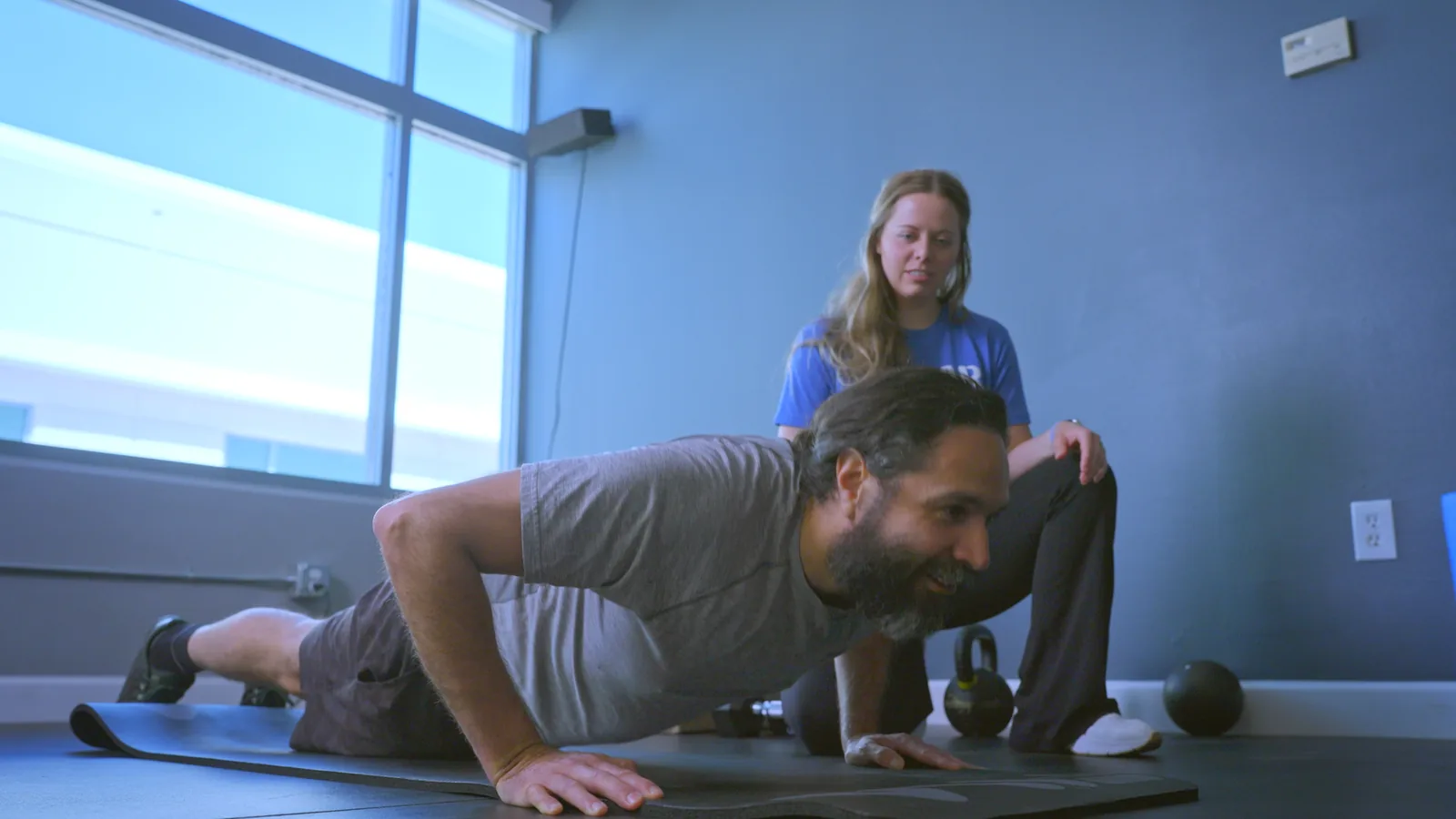
Push-ups, presses and the front of the shoulder
Elbows that flare out on a push-up put the front of the shoulder under strain. When pressing is what hurts, we look at your elbow position and at how far your arm can reach behind you.
How the rehab progresses
Sort out the cause
We test shoulder range, rotator cuff and shoulder blade strength, and how the joint behaves under load, to separate impingement from a cuff tear, instability or the biceps tendon.
Calm it without stopping
Pressing and overhead work are adjusted rather than dropped, and hands-on work or dry needling settle the area enough to load it.
Load the tendons
Rotator cuff and shoulder blade work progresses gradually, on a schedule, judged by how the shoulder feels the next morning as well as during the session.
Back to full overhead load
Pressing, pulling and sport-specific overhead work build back up until the shoulder takes the full load of your training without compensating.
Your first visit for a painful shoulder
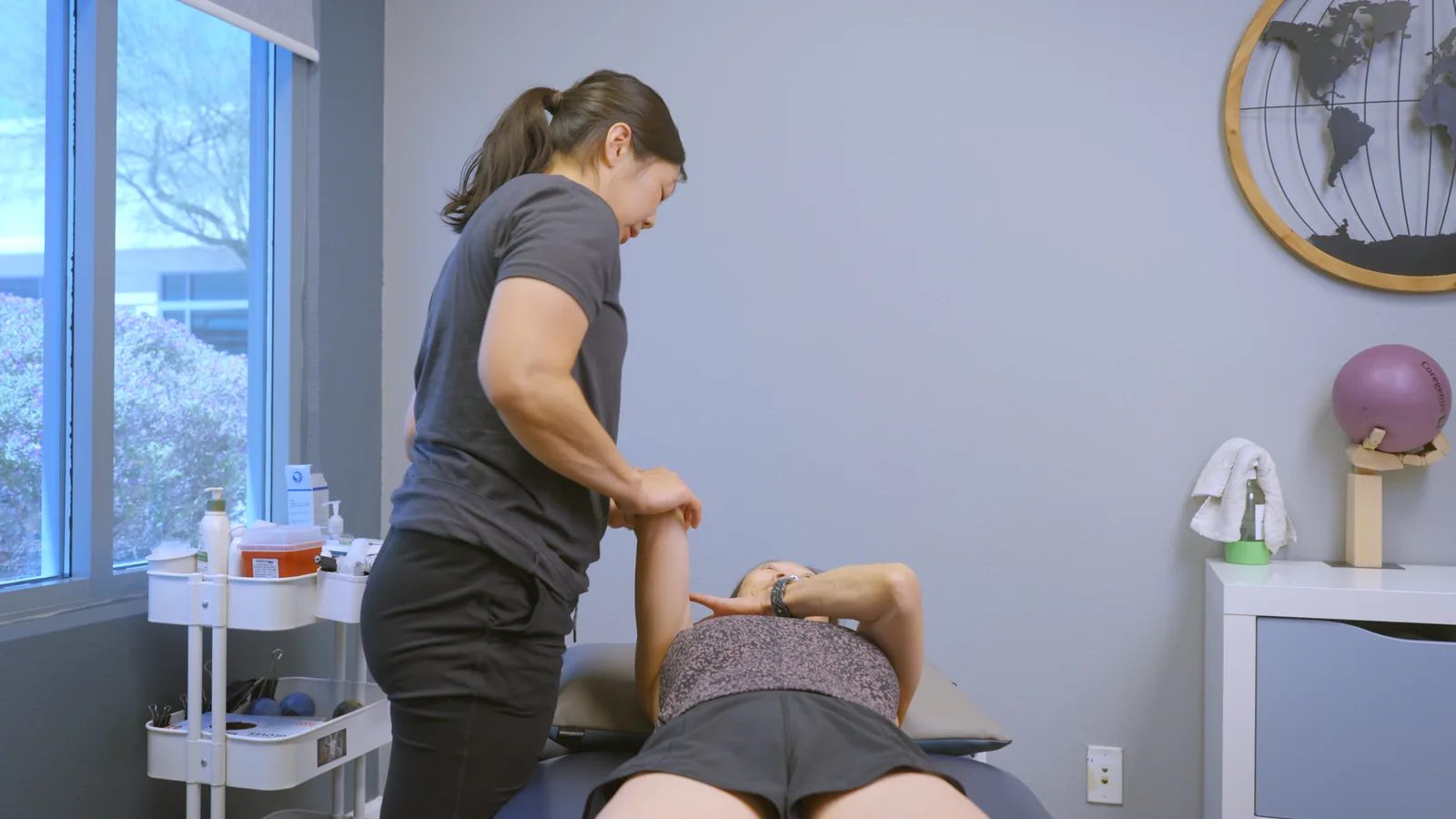
An hour, one-on-one. We check shoulder mobility, rotator cuff and shoulder blade strength and how the joint holds up under load, and we watch the movement that hurts, whether that is a press, a reach or a throw.
You leave knowing what is driving it and what needs to happen to get you back to full function.
Book appointmentFrequently asked questions
Can I keep lifting with shoulder impingement?
Usually yes, with changes. A different grip, a shorter range or a lighter load lets you keep training while the tendons settle, and a long layoff tends to leave the shoulder less ready for the old load.
Does impingement mean I need surgery?
Not usually. Impingement is mostly driven by movement and muscle imbalance rather than structural damage, and it tends to respond well to physical therapy. If what we find points to something that needs surgery, we will tell you that.
What is the difference between impingement and a rotator cuff tear?
Both can hurt overhead. A tear can also leave the shoulder weak, and tears sit on a spectrum, so not all of them need surgery. They are treated differently, which is why we test before we build the plan.
Do you treat overhead athletes?
Yes. Pitchers, swimmers, volleyball and tennis players put loads through the shoulder that non-athletes do not, so we look at throwing, stroke and overhead mechanics as part of the evaluation and train you back into those positions.
Related care
More in performance physical therapy: rotator cuff rehab; tennis and golfer's elbow treatment; sports injury rehabilitation; and sports physical therapy.
Shoulder impingement rehab for patients from Las Vegas, Spring Valley, North Las Vegas, Summerlin South, Summerlin and Summerlin West, at our clinic at 7381 Prairie Falcon Rd, Ste 110, Las Vegas.